Podcast 3: Neurohacking Memory

Superpower your memory and increase cognitive function using time tested, evidence supported botanicals.

Show notes:

3:16 Yi Zhi Ren

4:05 Gut flora

4:30 Lymphatic drainage Continue reading

Podcast 2-Biohacking Athletics

Discover the secrets of warlords, kung fu masters and Olympians.

Show notes:

:50 General Han Xin

1:27 Ban ZhiLian

2:10 General YueFei Continue reading

Podcast 1-Herbal Foot Soaks

Explore the history, research and easy application of herbal foot soaks.

Subscribe to the Podcast by clicking here

Show notes

:40 History/legend of foot soaks

(Earlier accounts are in Confucius’ book or rites)

2:50 Case studies Continue reading

Enlightenweight Book Published!

Enlightenweight Published!

mockup

“You are made of Heaven and Earth-a delicate combination of gasses and microbial dust merged into an elegantly integrated whole….Master your microbiome and the world will become your garden, your pharmacy, and your playground.”- Enlightenweight

After 3 years and countless revisions it’s finally ready. We wanted to offer 3 versions.

Version 1: Kindle (Available now)

Version 2: Paper (Available now)

Version 3: Audiobook (Expected completion within the year.)

Enjoy,

Andrew Miles L.Ac and Qiu Xuelan Ph.D

Find it here

How to Meditate Through Boring Meetings

7023561195_f30a5d0281_b

Welcome to purgatory.

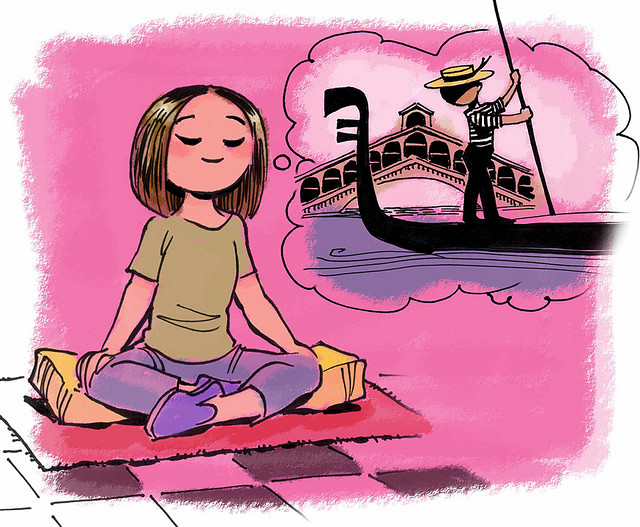
Eventually we all get stuck somewhere. Perhaps it’s a pointless meeting that carries on because some blowhard likes the sound of his own voice. Maybe it’s a high school graduation where you are subjected to a barrage of platitudes. We have all been there and you will probably have to attend more these things in the future. Think of it as an intense yoga posture. Go inward, find your alignment and use breathing to make the situation useful. There is usually something that isn’t flowing as well as it could. Relax your body, meditate with your eyes open, clap when you are supposed to and make the best of it. You can even smile, nod and give packaged responses without having to really be there mentally. In this way, you can make the experience restorative rather than soul sucking. If you don’t want to meditate, you can just sleep. We used to be active with the Lions Club. Other than the two of us, most of the Lions in our chapter were well over 70 years old. Every Wednesday at lunch, different speakers came in. Some of them were great, some had political agendas or were simply dull. When a speaker didn’t connect with the audience, you would know it. Many of the members would simply go to sleep. Many weren’t even subtle about it. Mouths agape, snoring, some would put their heads on the table. I thought there must be an epidemic of narcolepsy. As I investigated, I found that for some of them it was a conscious choice. I asked some of the members why they nodded off at times. One man answered, “Well, it beats getting upset over nothing.” Another man was over 90 years old and active in the club. He gave me the following advice. “Imagine if all the idiots and the arguments were all just gone. You are better off getting some rest so that you have more energy for the things that actually matter.” This may be sage advice, but unless you are retired, you might consider faking attention. After you retire, go ahead and sleep.

2484415344_ec984ffe14_z

Off to my happy place.

  1. Identify that the situation is pointless.
  2. As you inhale imagine it inflating and aligning your entire structure.
  3. As you exhale relax away all of the excess tension.
  4. See how much you can relax and down shift mentally while still appearing be “be there.”
  5. As you become aware of internal sensations of temperature and motion relax more and see what you can feel internally. Time is an internal perception relative to your mental state. With practice you can recharge your body while making time fly.
8028450081_5909b5c7fb_c

You can make this facial expression even if no one is home. Nod occasionally and everyone will adore you.

Creative Commons License How to Meditate Through Boring Meetings by Andrew Miles & Xuelan Qiu is licensed under a Creative Commons Attribution-NonCommercial-NoDerivatives 4.0 International License. Based on a work at enlightenweight.com.

Adapting to Cold and Dry

Reading time: 2 mins

Cold and Dry

dry winter leave by Pavlina Jane

The cold, dry air of the arctic causes life to slow to a crawl. The slow decay and sparse plant life contributes to poor soil quality. Plant life grows briefly in Summer and then must prepare for the icy hibernation of winter. Every animal in these environments must adapt. They insulate themselves in fat and burrow underground to create warmer microclimates.

In the arctic life itself seems to escape with every breath. The air pulls water and heat out of your skin. In the arctic, people need to stay warm and moist. As northern peoples eat nutritionally dense foods, it providing more metabolic heat. It creates a tropical greenhouse inside, serving as a climate barrier against the frigid landscape. To help maintain this barrier they use pungent foods such as leeks garlic or hard liquor to maintain warmth. Where pungent foods are scarce, sweat baths achieve similar effects. Smokehouses and saunas can be found throughout the Arctic circle from Scandinavia to Alaska. Continue reading

Adapting to Cold and Moist

Reading time : 2.5 min

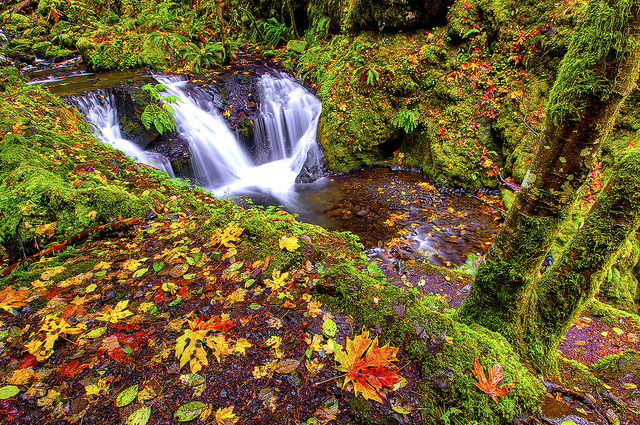
Oregon falls by Charles Knowles

Cold and Moist

The animals in a temperate forest sing, but not with the complexity of their tropical cousins. The flowers bloom and fruits ripen, but more modestly than their tropical counterparts. Cool weather slows the collective metabolism. There is less density of life and less competition than the tropics.

There are certainly areas of the body that should be swampy, but when this extends into areas which are meant to be dry, it creates problems. Sedentary living reduces fluid metabolism. This can lead to water retention. When the internal microbiome becomes cold and damp, it overloads your water transport mechanisms. It doesn’t matter how much water you are drinking. What is important is that your body is distributing all of the water you absorb. Continue reading

GASOTRANSMITTERS AND ACUPUNCTURE


3108215464_77fa0901b2_o

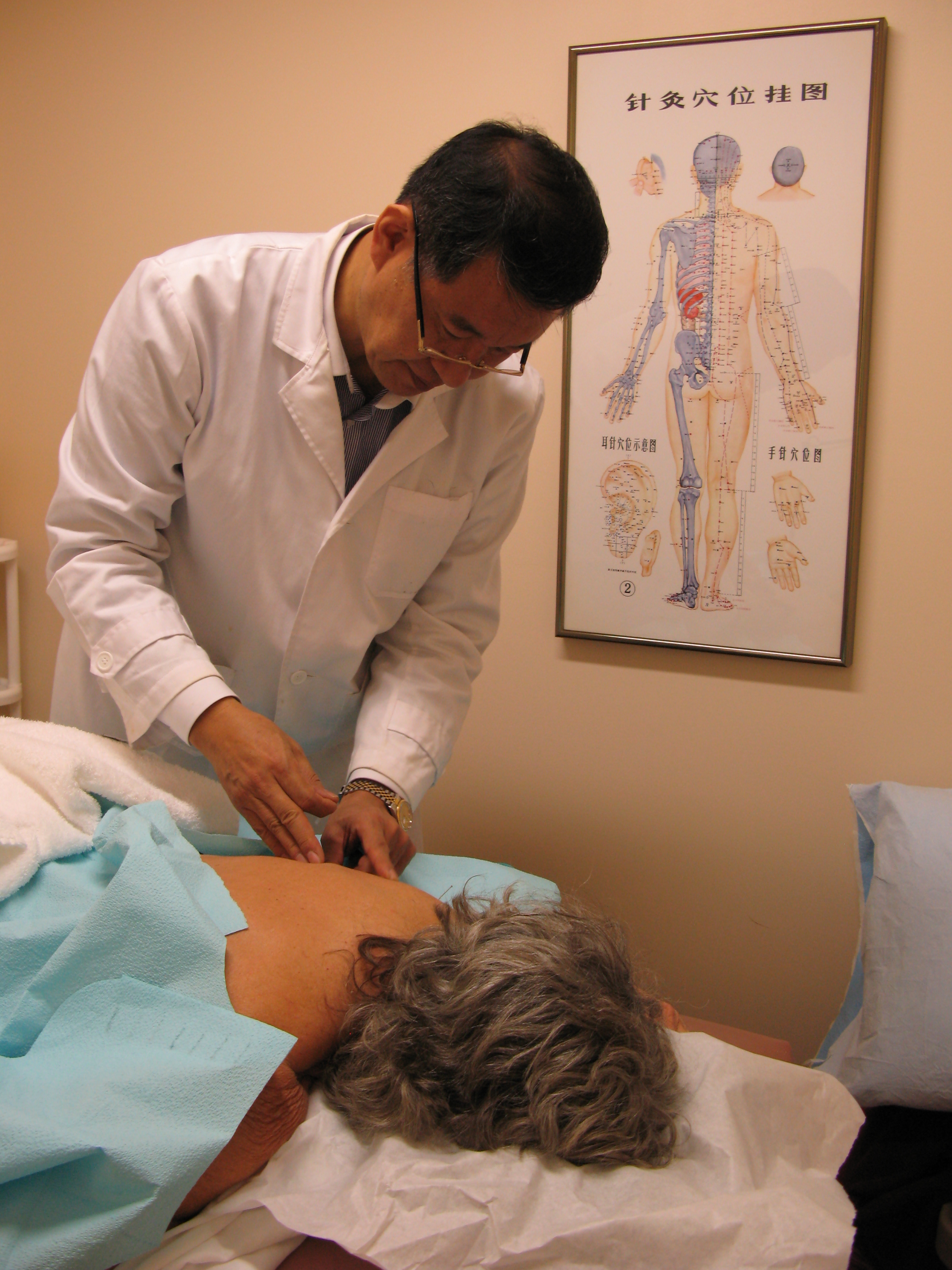
By measuring for lower electrical resistance, Dr. Jia-Xu Chen and Sheng-Xing Ma were able to find the exact positions of acupuncture points. Inspired by the idea that the Chinese character for Qi 气 literatally means gas, they decided to test whether gasses were in fact escaping these points. They discovered one gas in particular that serves as a neurotransmitter. These  gaseous  neurotransmitters such as carbon monoxide, nitric oxide and hydrogen sulfide are a vital part of human physiology. Continue reading

Intermittent fasting: Time tested methods for fat loss and emotional health.

Reading Time: 4 minutes.

3258973193_c70df0436c_b

Buddha taught his disciples to avoid eating after noon so they could enjoy life without illness, buoyancy of strength and a comfortable life. In Buddhism there is a saying that Heavenly beings eat in the morning, humans eat at lunch, animals eat in the evening and ghosts eat at night. This sounds really strange if you take it literally. Certainly animals eat in the morning. The point of this is not about angels or ghosts, but rather about the effects of darkness and light on the human body. This may seem esoteric, but when you think about it within the context of daily life it becomes more down to Earth. People act like jerks when they are hungry. Sometimes they act like demons. By contrast, a great breakfast sets the foundation for an amazing day.

3457632135_672585f454_o

Jesus, was a proponent of fasting. This may be why he is typically depicted with fabulous abs. While modern Catholic views on fasting are more flexible, it used to be that people were limited to one daytime meal per day. Most traditions of  Christianity  advocate fasting or  intermittent  fasting with a daytime meal. Continue reading

Adapting to Heat and Dampness

Reading Time: 4 Min

Tropical rainforest by Lexe-I

Heat and Dampness

The rainforest hums. Tiny feet pitter-patter over wet leaves. In the warm nights animals sing erotic serenades. Life is abundant and competition is fierce. Trees race to reach the canopy, choking out their competition. The fallen quickly rot and rejoin the soil. These hot, wet climates host most of Earth’s species. This rivalry inspires living things to adorn themselves with bright colors. They spread seeds in sweet fruit. They display beauty in movement, color and sound. They protect themselves with piercing points and with poison. This is where you can find some of the most chemically active plants and animals. You can also find intensity of decay.

Leaves spread out evenly across a forest floor will turn into mulch at a consistent rate. If you rake those same leaves into a pile and cover them to retain moisture, they will get hot from all the microbial activity. In some instances, they can get so hot that they catch fire.

Continue reading